Eccles cake and lobster: four generations of one family at Shoreham

Katrine and Mac Ball with grandchildren: Michael, David and Bronnie
At 94, Jenny Ellis finds the distance from Eltham to Shoreham tougher to manage now and leaves that to her children and grandchildren.
So, we catch up in the timber and mud brick house in Eltham, part of which the innovative designer and builder Alistair Knox made for her parents, and where Jenny now lives. Her daughter, Bronnie Hattam (nee Ellis), lives next door and joins us.
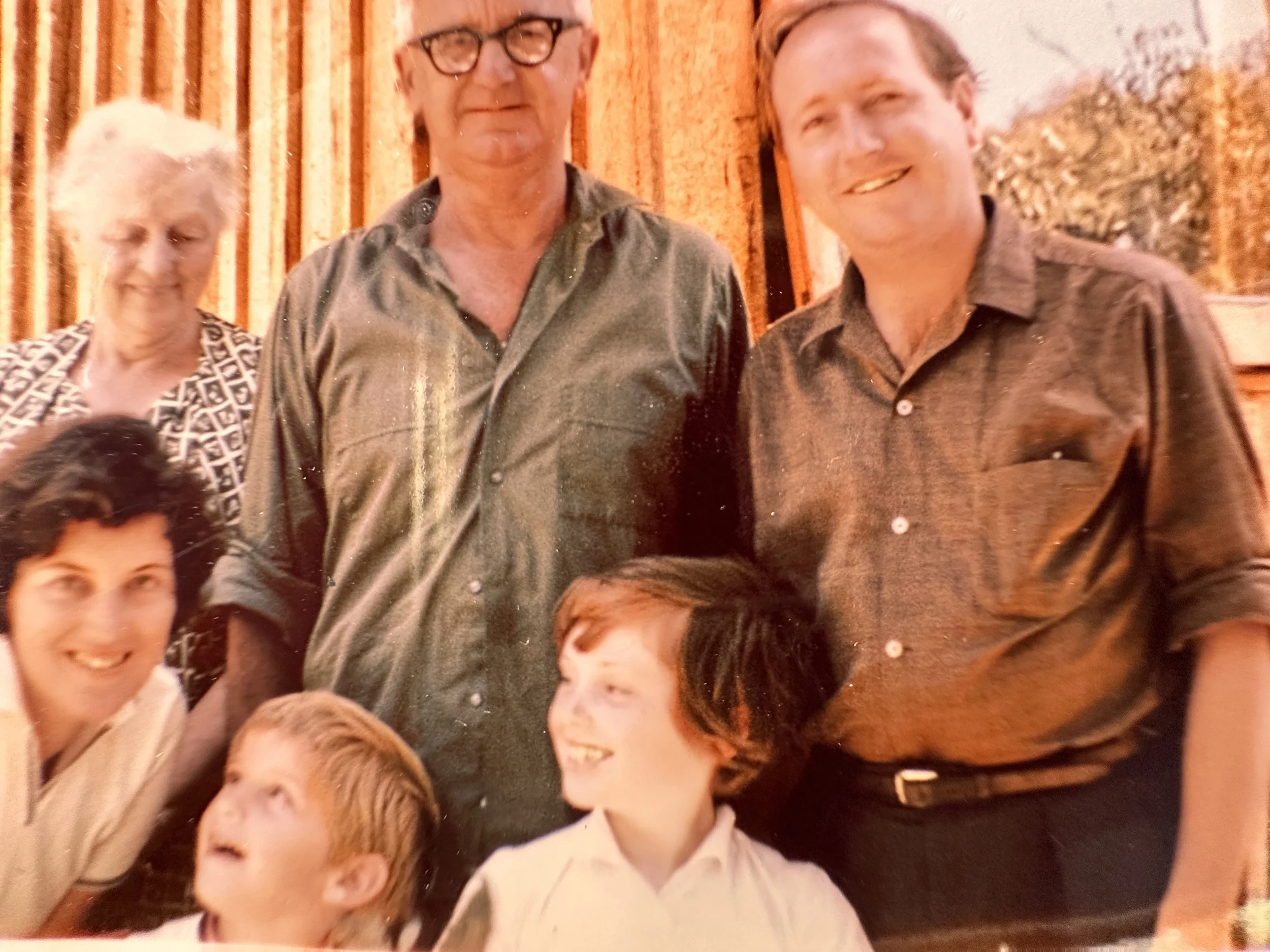
At the family’s Shoreham beach house: back row Katrine Ball, Mac Ball, Brian Ellis; front row: Jenny Ellis with her two older children, David and Bronnie
Jenny remembers the weatherboard cottage on a bush block abutting the foreshore reserve that her mother, Katrine Ball (nee Anderson), found just as Shoreham became the favoured getaway for academics, artists and activists.
“My eldest, Bronnie, was two when mum bought the Shoreham block in 1960 and six by the time the house on it was built,” Jenny says. “Every year we spent idyllic summers there.”
“Katrine made Eccles fruit cakes and bought lobster from the Flinders pier,” Bronnie says. “We children were allowed a tiny taste of the lobster cooked with whiskey and cream.”
So began a tradition that has now stretched to the fourth generation.
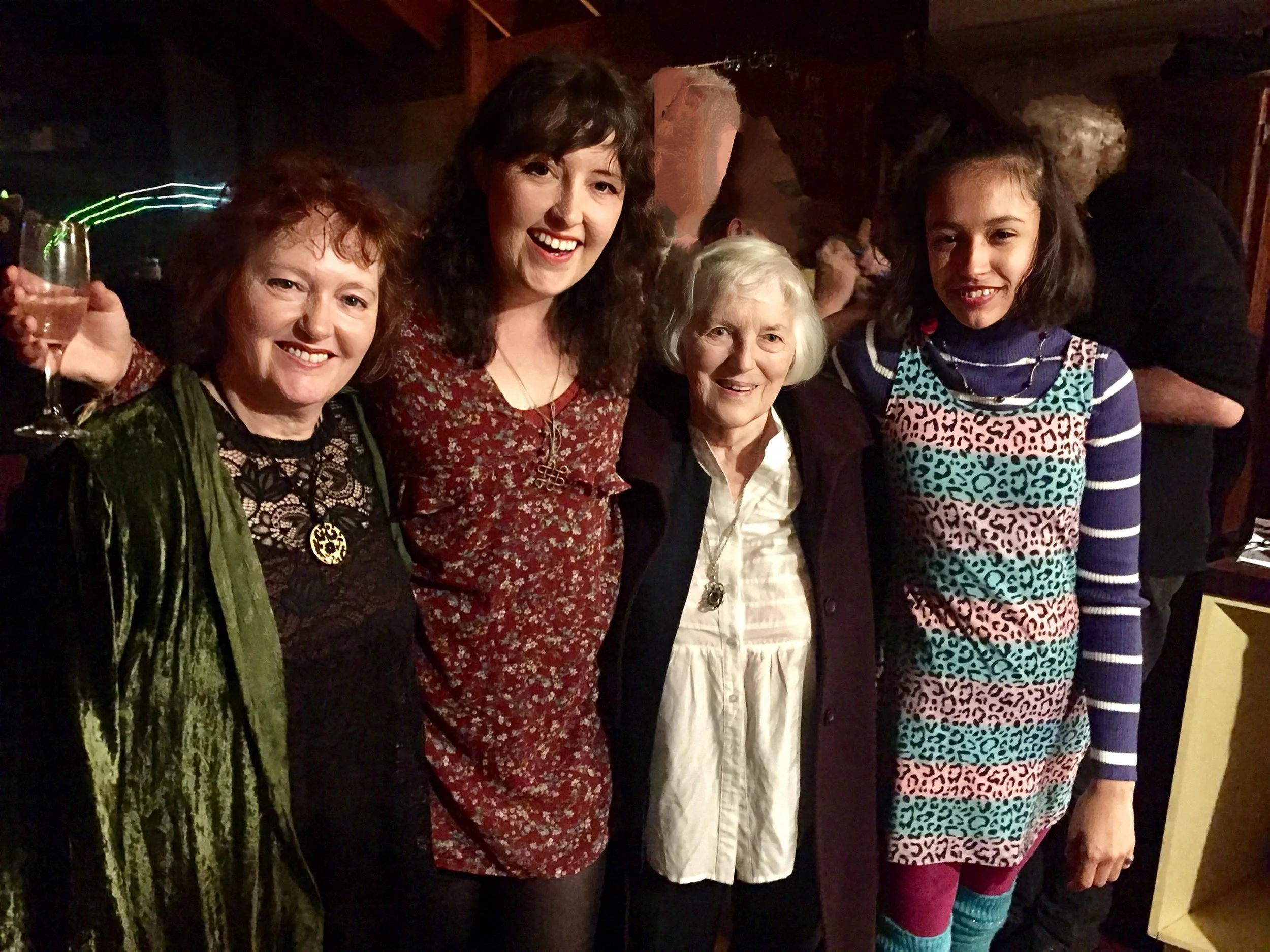
Three of four generations of the Ellis Ball women: from L-R- Bronnie Hattam (nee Ellis), her daughter Milly Hattam, Jenny Ellis (nee Ball) and Jenny’s youngest child Micheal Ellis’s daughter Maalini Ellis
Katrine and the first generation
Katrine Anderson was born in Melbourne in 1899, the fourth of six children. Her parents had left Ireland for Australia in search of a better life. Dad, Joshua Thomas Noble Anderson, known as JT, was an innovative civil engineer who at one point partnered with World War 1 hero, General Sir John Monash.
The Andersons were not wealthy, and their finances fluctuated. For a period, they lived off the land at Narbethong, in a simple shack JT built by hand.
It was a rugged upbringing, but one that shaped Katrine’s lifelong adaptability and confidence. As her grandson Michael Ellis recalls, “She could host a dinner party for General Macarthur… or cook a rustic chicken casserole with home grown veggies and an old chook she had beheaded herself.”
The Anderson siblings were all accomplished in their own ways.
Frances, known as Frankie, was an exhibiting artist who helped pioneer a form of art therapy for traumatised children from war-torn Europe.
Alice founded Australia’s first all‑women garage in Melbourne.
Katrine became a respected clerk with a knack for decoding. But she turned down a position in New York, her sights fixed on a rising star.
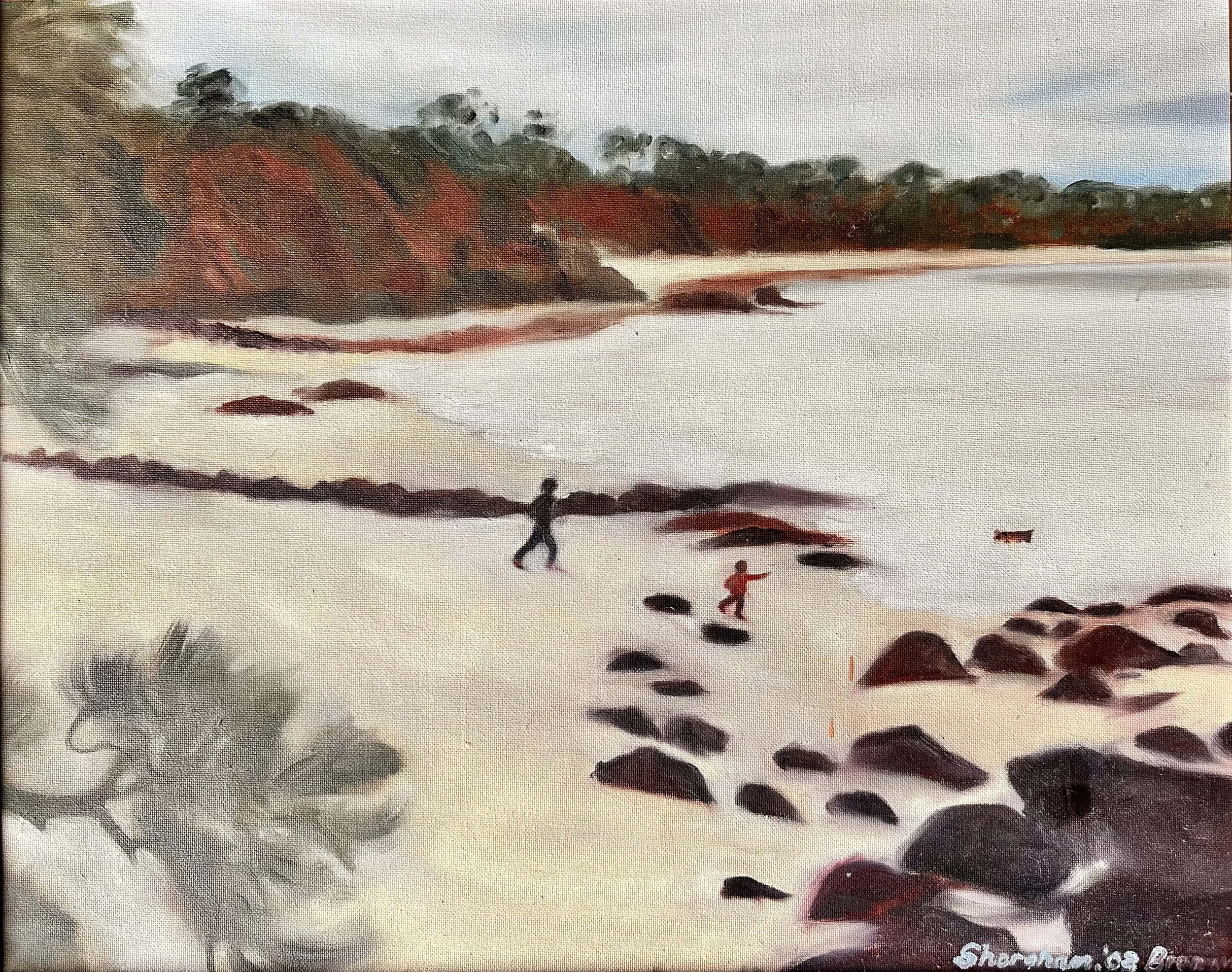
One of Bronnie Hattam’s paintings of Shoreham
When her younger sister, Claire, was studying engineering at Melbourne University, she told Katrine about an electrifying left-leaning liberal staff member specialising in political philosophy and modern political institutions called William Macmahon Ball.
“My mother went along to hear him, and fell for him,” says Jenny. “JT tried to throw him down the steps at the Anderson house in Kew because ‘Mac,’ as he was known, was a known womaniser.”
But the couple married in 1928. Jenny was born in 1932 and would be their only child.
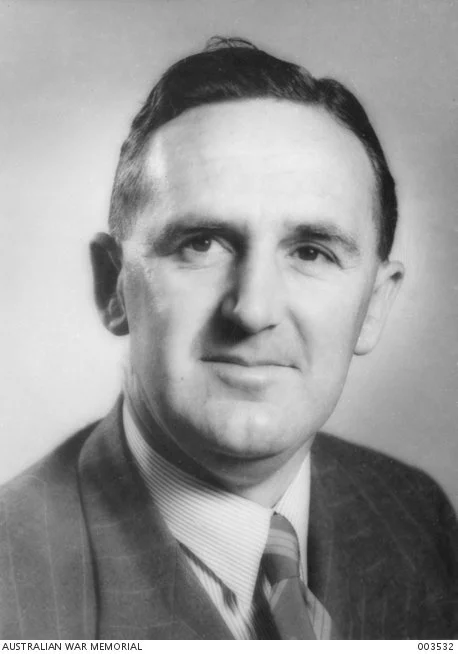
William MacMahon Ball
Mac’s career accelerated during the tense years leading up to the Second World War. He led a Melbourne-based team called ‘the listening post’ that monitored enemy radio transmissions and disseminated propaganda to friendly and enemy countries in the area.
He reported on conflict in the Netherlands East Indies and later served briefly on the Allied Council in post‑war Japan. Mac was known for his independence of thought, challenging both General MacArthur’s authority and Prime Minister Robert Menzies’ rigid anti‑communist stance.
“Mac ruffled feathers by his straight talking,” Jenny says, recalling how he advocated for stronger ties with Asian neighbours long before such views were mainstream.
During the war, Mac feared the Japanese would bomb the munitions factory opposite their Raven Street house in Kew, and moved the family to Eltham.
There they joined a bohemian enclave that included landscape designer Gordon Ford, his first wife photographer Sue Ford, artist Myra Skipper, and sculptor Matcham Skipper, who lived at Montsalvat.
It was an intellectually vibrant world. One that started holidaying at Shoreham.
Shoreham from the second world war to the sixties
Long before she bought her block, the Western Port village appealed to Katrine. It was close to Flinders where Frankie and her husband Alfred Derham used to stay, and it reminded her of Dunedin, New Zealand where her sister Claire was born.
Jenny loved it there.
“I spent my holidays with May Martin, the sister of Frankie’s school friend, and her partner, Arthur Cholmondely,” Jenny says. “They could live there unmarried. Arthur was a talented wood craftsman and I still have a table he made.”
Arthur owned the block at 22 Prout Webb Road that artist and obstetrician, Dr Hal Hattam, later bought.
Jenny’s friend Jill Martin would also stay, and the two slept in the little hut on the block that May and Arthur called “Parrot House.” Facilities were very basic with the lavatory a long drop in an outhouse.
Food was scarce during the war.
“I wrote a letter to my parents with drawings of myself,” Jenny recalls, “quite plump at first, but dwindling to very thin, and then, alas, a gravestone. My parents send a ration card; death was averted.”
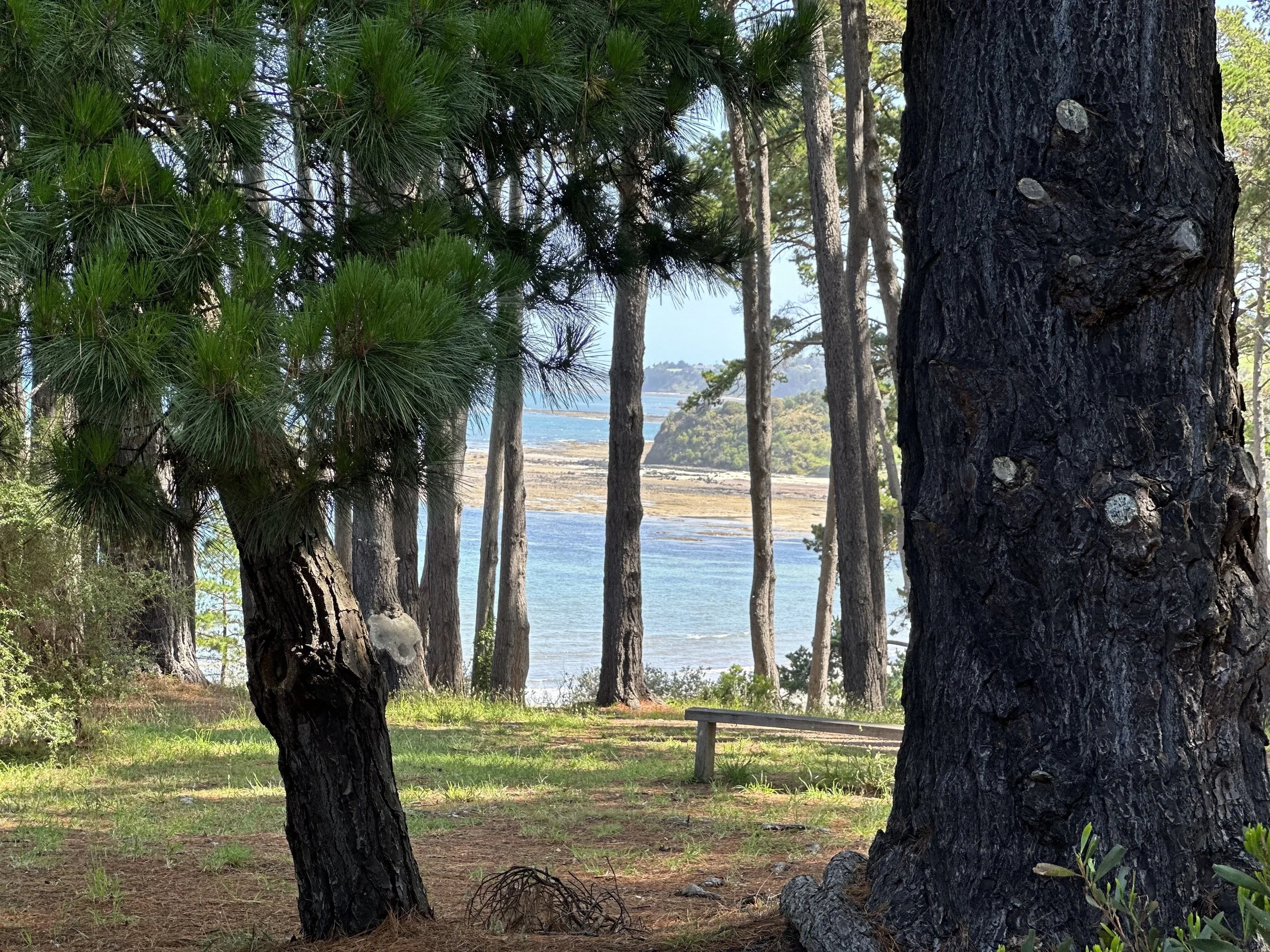
The Pines at Shoreham which Jenny fought to have heritage listed.
War ends and Jenny meets her future husband
After the war, Mac became Professor of Political Science at Melbourne and a familiar voice on ABC Radio’s Nations Forum of the Air.
“Mac was a highly emotional and lovely dad,” Jenny says. “But he was also critical of me.”
At his urging, she cut short her study of social work at Melbourne University in the mid-50s to finish the degree at Oxford. The prevailing theory of practice at Oxford emphasised social activism rather than the assessment of individual patient needs. She railed against the British model, and when her parents visited, she gladly left England with them.
“I met my future husband on the ship returning to Australia,” Jenny says. “Brian was an extrovert and would entertain the other guests by singing Tom Lehrer. He was in awe of Mac, and I think wanted to marry me because of that!”
They honeymooned in Shoreham and later settled in Eltham near her parents.
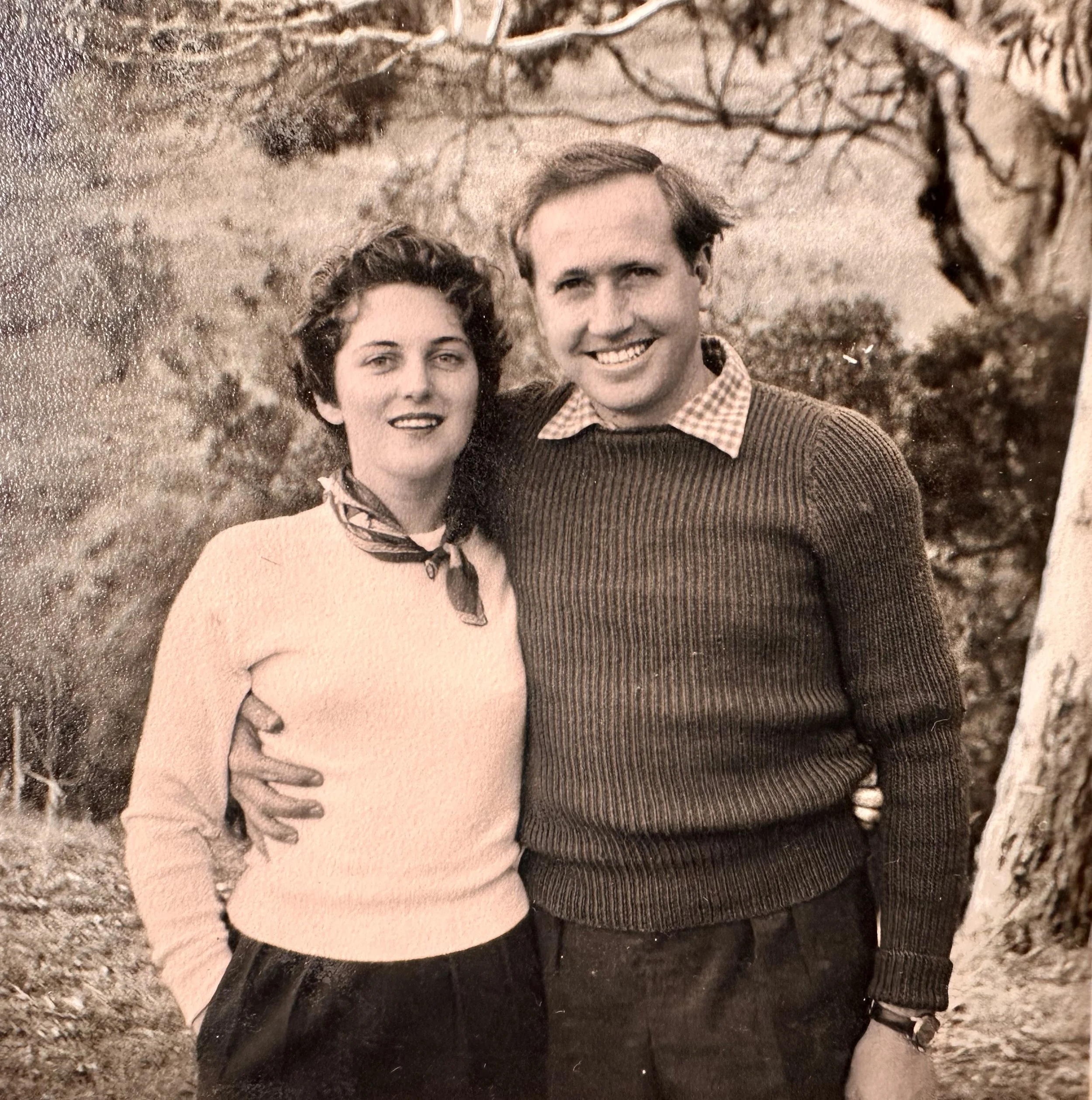
Jenny and Brian Ellis on their honeymoon in Shoreham
Brian Ellis had come from humble beginnings in Adelaide. But once he got to university Brian’s promise showed with a first in physics and a scholarship to Oxford where he studied philosophy.
By 1966, Brian had set up the philosophy department at the new La Trobe University, one of the largest in the English-speaking world.
Jenny worked as a social worker with the Aboriginal Advancement League helping children and parents, before going to Northcote Technical School during the Whitlam era, and then to other schools in the Northern region.
“It was a heady time of ‘It’s time’ change,” Jenny’s daughter Bronnie says.
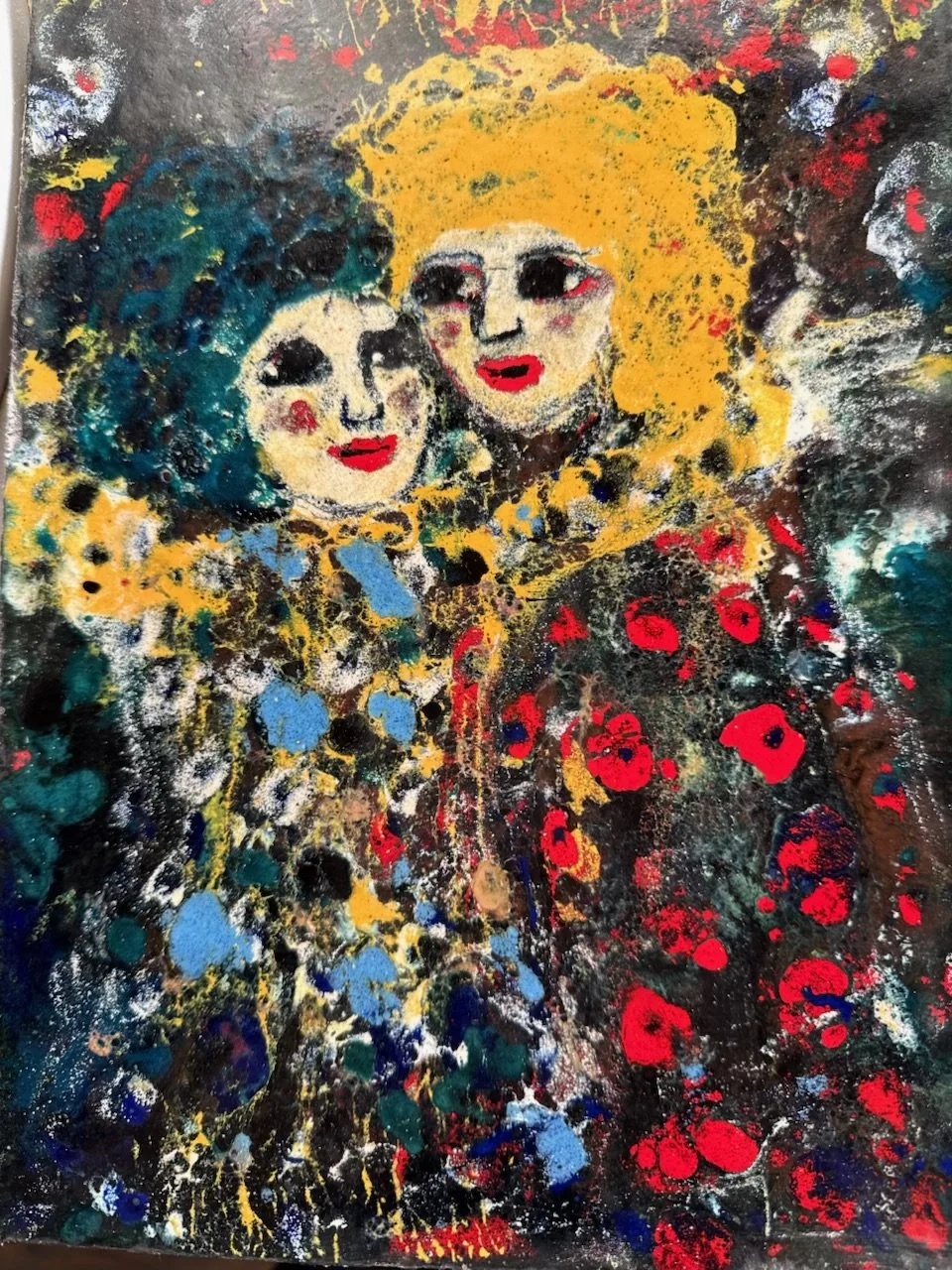
Bronnie still treasures the enamel painting that Joy Peck made and gave to her.
Eltham by the Sea
By the 1960s and ’70s, so many Eltham families either owned or rented holiday houses in Shoreham houses that the village became known as “Eltham by the Sea.”
Jenny and Bronnie remember endless drinks and dinners with artist Joy Peck and her husband, architectural engineer Hal Peck, who had a place at 18 Prout Webb Road.
Gordon and Sue Ford had a holiday house in Steen Avenue, and when they separated, Gordon’s second wife, Gwen Ogden spent time there.
Their house guests included film maker Tim Burstall and his wife theatre director and founder of La Mama Theatre in Carlton, Betty Burstall, as well as Myra Skipper.
Melbourne’s China specialist Arthur Huck was in Marine Parade, and artist Clifton Pugh was at 8 May Street, a house designed for him in 1959/60 by Morris Pirotta.
La Trobe University’s China specialist, Jack Gregory and his social worker wife, Mary, used to stay with Brian and Jenny Ellis.
“There were many more. But I loved Joy Peck,” says Bronnie, who became Mayor of Nillumbik, the local government shire that takes in Eltham. “She encouraged me to paint and gave me inks and special paper at Shoreham.”
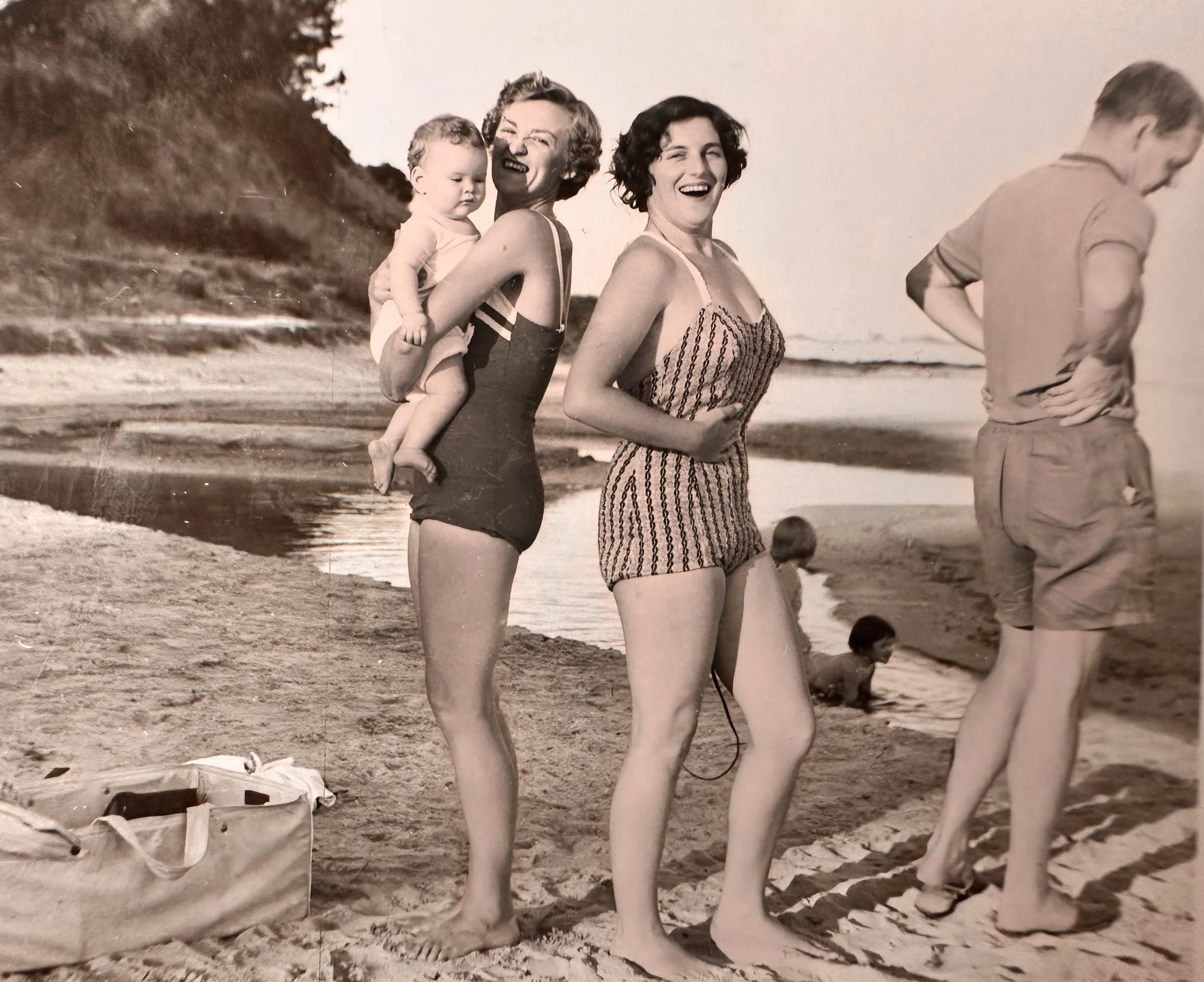
Social worker Mary Gregory holding daughter Prue with Jenny Ellis and historian Jack Gregory at the creek on Shoreham beach in late 1959 or 1960
Jenny and Bronnie remember early holidays at Shoreham fondly where the two professors battled it out at the large billiard table.
“Mac was brilliant at psyching out Brian,” Jenny says. “He used to taunt him with lines like ‘You can’t possibly miss that’ and ‘You can’t lose’.”
It was contest that often included Hal Peck who had been taught by Walter Lindrum.
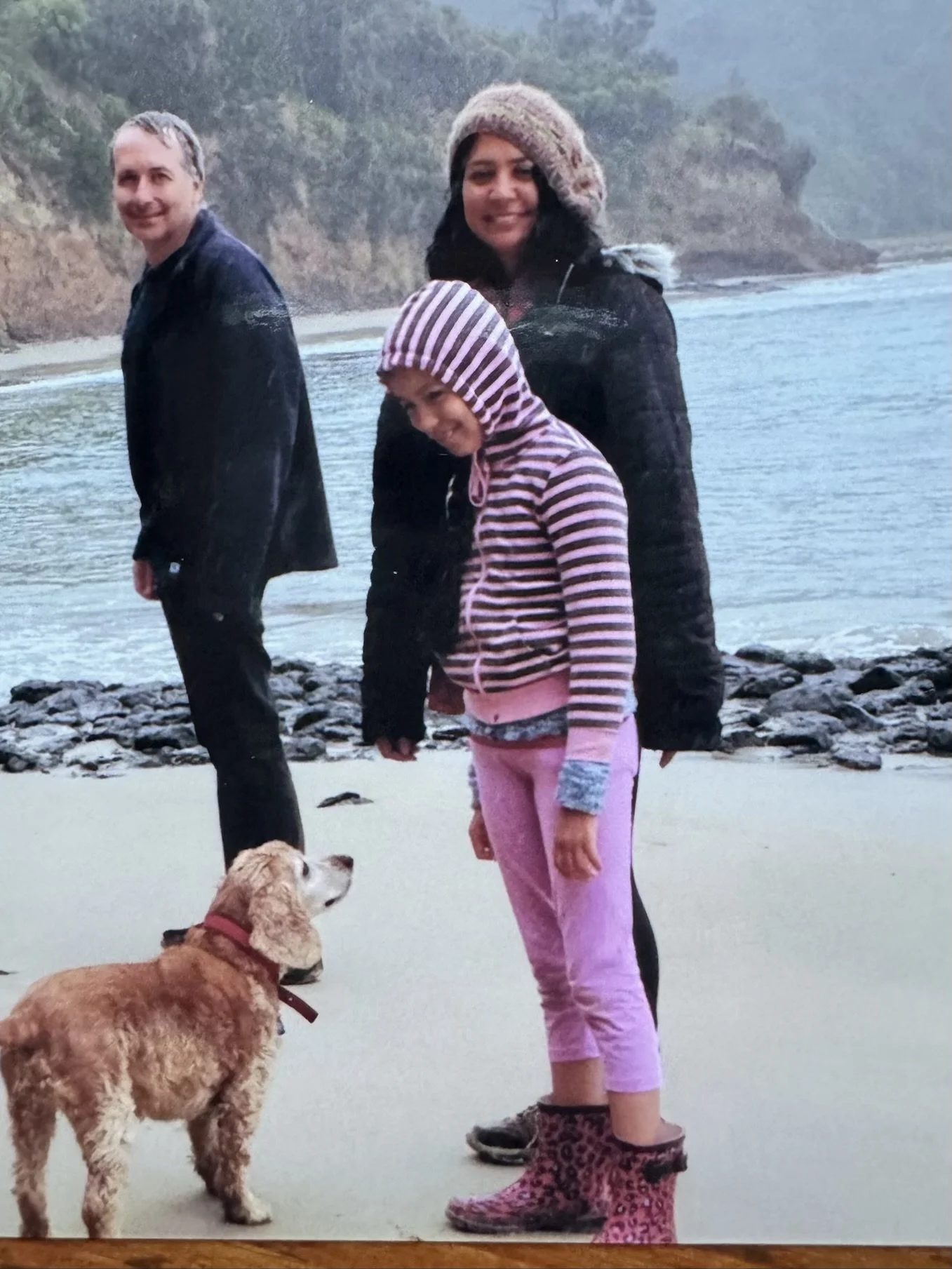
Michael Ellis with wife Sharnthi and their daughter Maalini (2011/12)
Jenny passes on her love of Shoreham
Jenny became active in protecting Shoreham, fighting inappropriate development, securing heritage listing for the historic pines, and supporting Western Port’s Ramsar designation.
Her three children and four grandchildren have grown up with a deep love for the block Katrine bought.
“There’s a magic in the air down there. It helps you to pause,” Bronnie’s daughter Milly Hattam says.
“The house has become a museum of generational artifacts: mum’s list of all the books in it that she made as a teenager still hangs slightly tattered on the wall; grandma Jenny’s small chair for reading the newspaper on the beach still sits in the billiard room; and recently I discovered my great grandfather’s Bulletin magazines from the early 1950s, a snapshot into the political climate of the time. I can picture him sitting on the chair that remains the same to this day, reading away where mum now sits to read the current political climate.”
Jenny hopes the house will continue to be a place of quiet enjoyment. Bronnie adds that it should remain “surrounded by bush with dark at night so that the native nocturnal species have a viable habitat with minimal development.”
Like mother, like daughter — and now, a fourth generation.
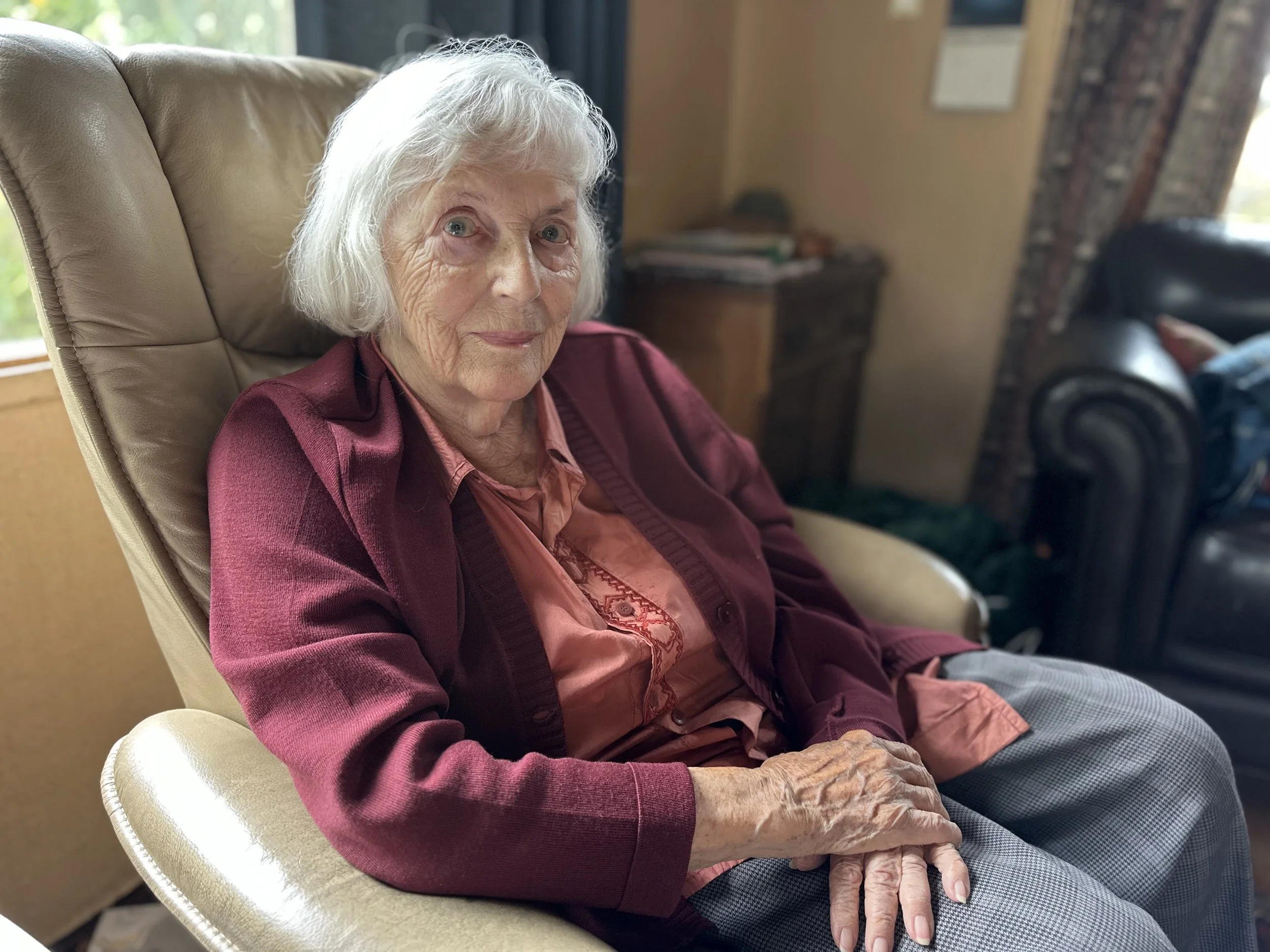
Jenny Ellis at home in Eltham