Messing About in Boats
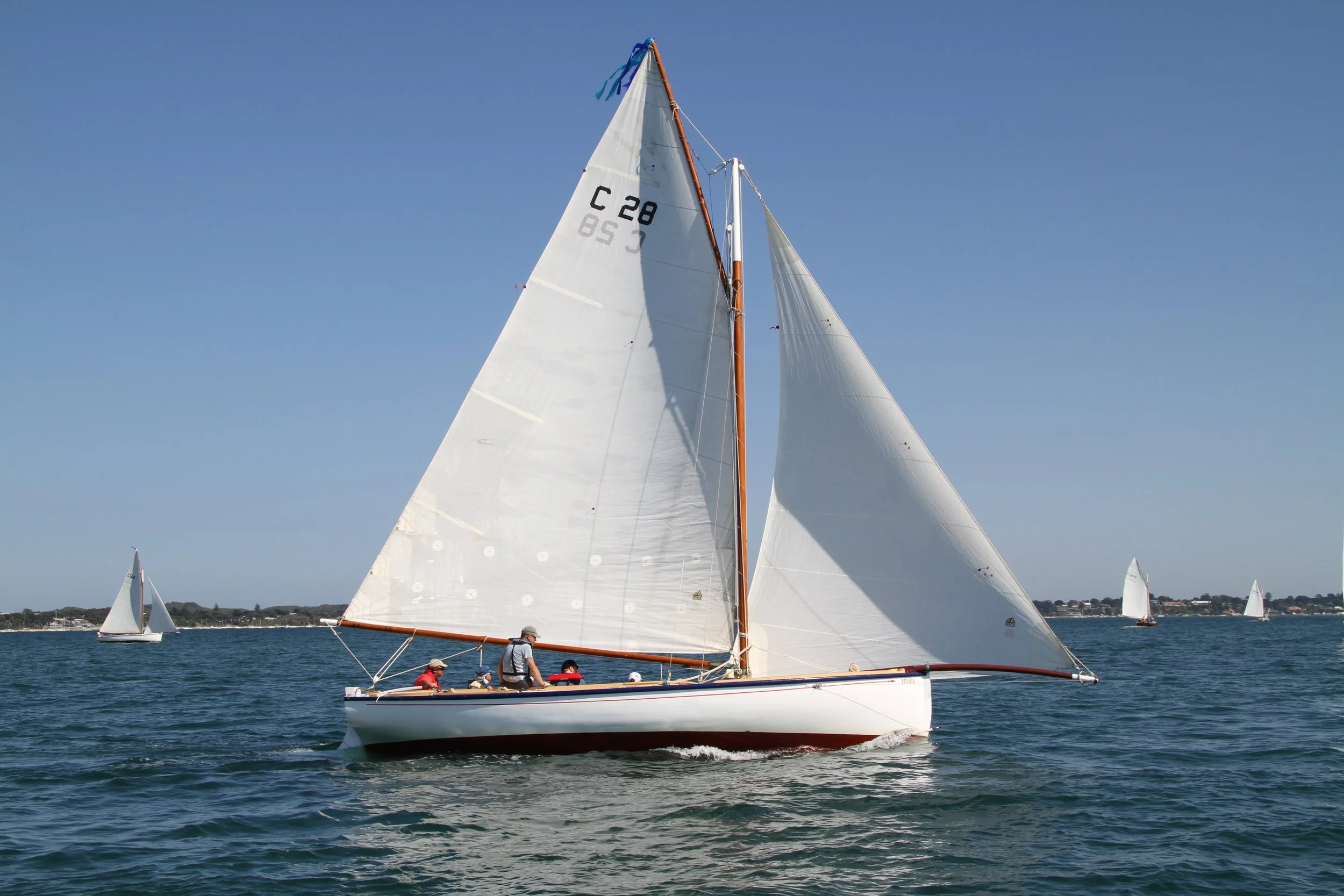
Russell sailing Wattle
By Russell Barrett
“Believe me, my young friend, there is nothing – absolutely nothing – half so much worth doing as simply messing about in boats.”
Water Rat’s famous remark to Mole mirrors my sentiments exactly. Kenneth Grahame wrote The Wind in the Willows in 1908, a classic evoking the leisurely pace of life on a river. But his delightful characters might just as well have been living in Flinders alongside me during the 1960s when I fell in love with boats.
Although my family was based in Melbourne, we spent most weekends and school holidays by the sea.
Dad had a double-ended wooden fishing boat moored on the north side of the Flinders pier. We would go fishing for flathead and leather jackets which were easy for children to reel in.
On the south side of the pier there was a couta boat called Muriel that belonged to local fisherman Andy Johansson.
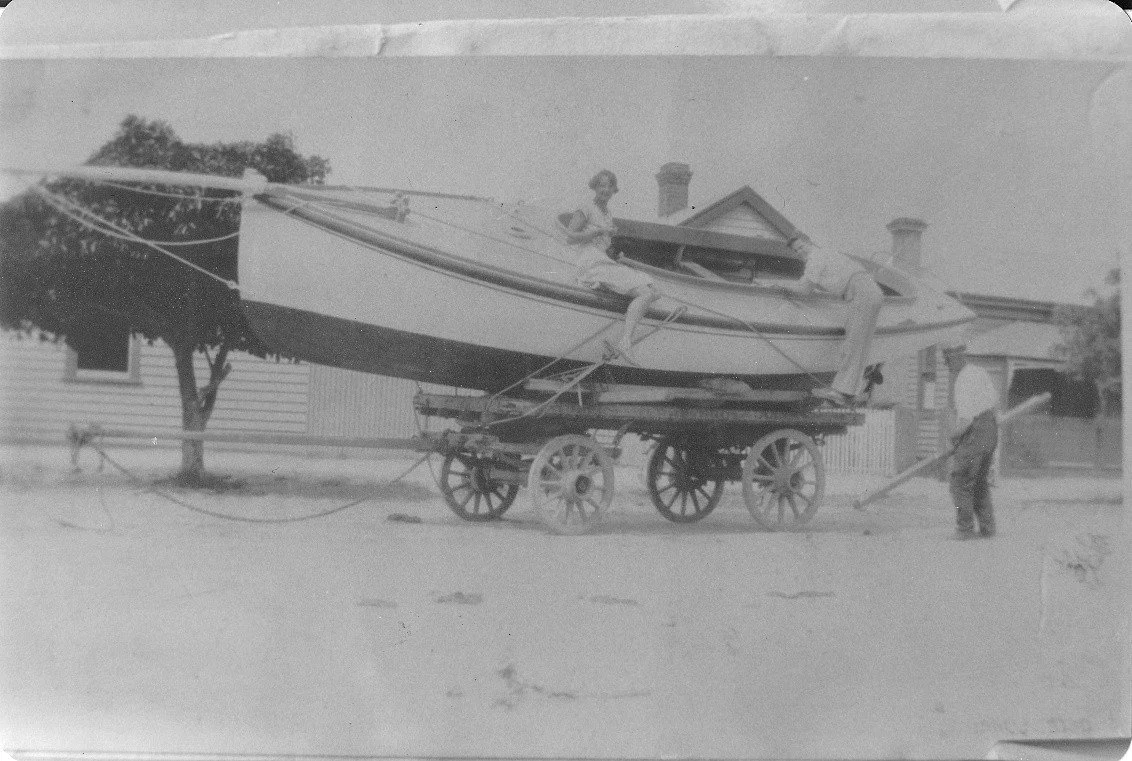
Wattle on the day she was launched in Queenscliff, 1928
Couta boats are named after the barracouta, a fish that was popular in the 1900s and caught off The Heads. More recently couta boats have become fashionable. I suspect the romance around their history and the beauty of their line has something to do with our longing for a life more in tune with the elements. But their heritage must never be forgotten.
Very little came easily to the fishermen who sailed couta boats. Their lives were about getting up early in the morning, dealing with the notoriously rugged waters of Bass Strait, heading out through the Rip, often with just one skipper and a lad.
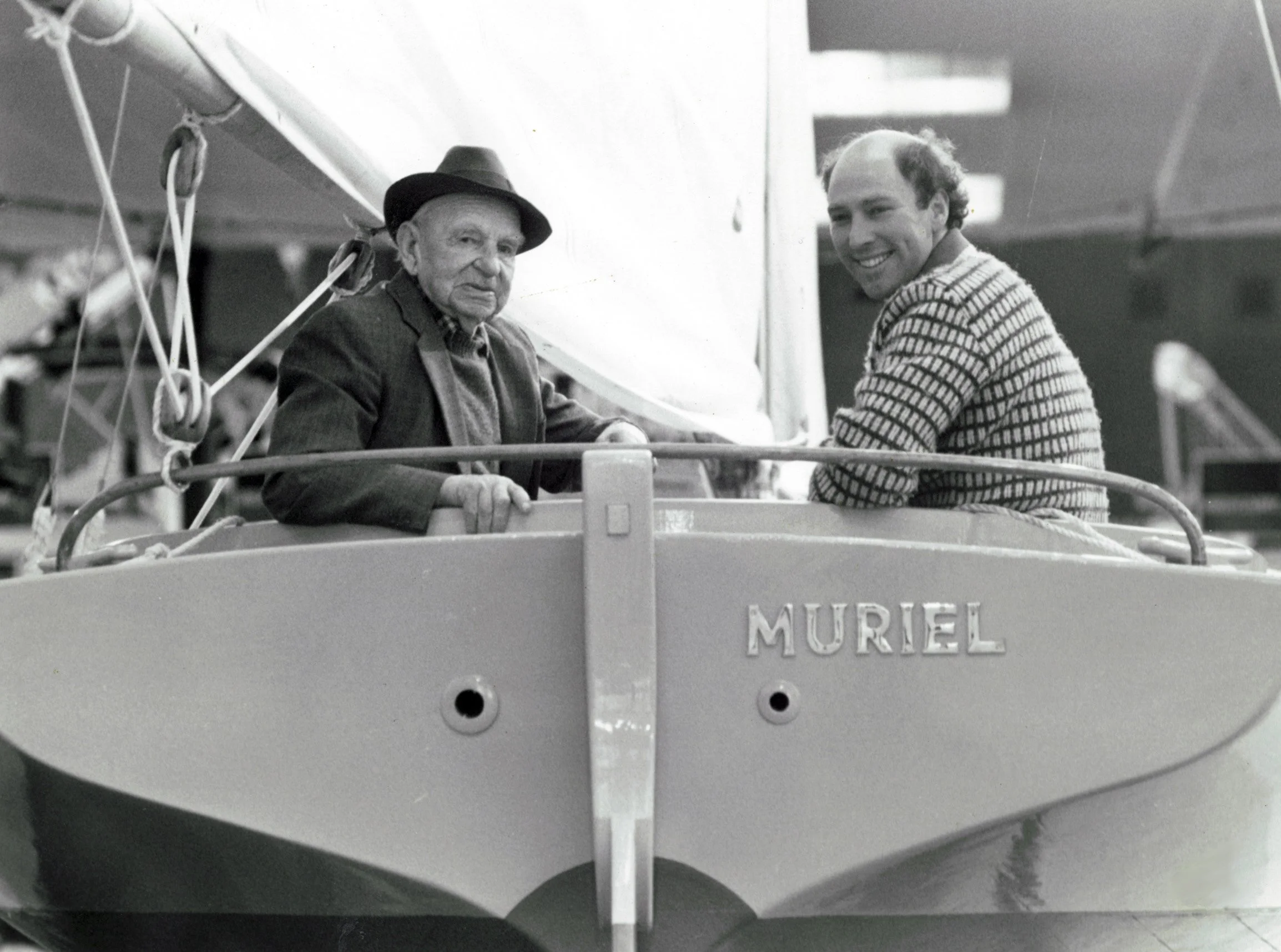
Andy Johannsen and Tim Phillips at the Melbourne Boat Show in a restored Muriel
Muriel is an open 26’ kauri pine couta boat. By the time I met her, the era of sailing had passed, and she had a rugby car engine. If one failed, a replacement was found to keep her fishing. Muriel maintained her sails, but over time she lost her centre board case.
But Muriel was not her original name.
In 1917, Gus Johnson commissioned a couta boat that he called Ruby. He sailed and fished in her, going as far as King Island, which was very brave in an open boat.
By 1919, Gus had survived a few close calls in the rugged waters there and sold Ruby to Andy Johansson for £100.
Andy had borrowed money from his sister Muriel and, to honour her generosity, renamed the boat Muriel.
From 1919 to 1930, she fished out of Queenscliff and then was taken to Flinders where Andy and his wife lived on the beach between the pier and the current day yacht club with other fishing families. Eventually, they bought a house in Cook Street which still stands today.
I understand there was a great sense of camaraderie amongst the fishing community, and Andy stayed in touch with friends in Queenscliff and Sorrento. Indeed, such was the closeness of the association that he kept driving crays over to Sorrento to sell them at ‘The Baths’ on Fridays.
Although a relatively short man, Andy had hands like soup plates and could drag in one of his craypots from 50 metres behind the boat as she sailed, which was quite an achievement.
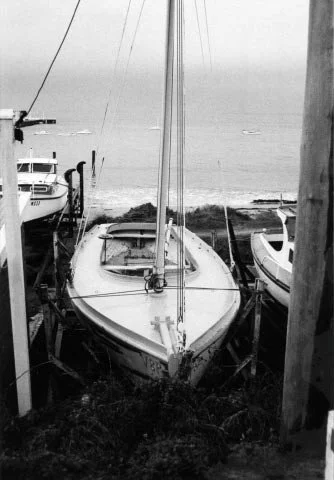
Muriel on the slipway at Flinders
As children we would head off with Andy in Muriel before dawn through a gap in West Head and up to Cape Schanck to collect his cray pots. For a young city lad, it was the adventure of a lifetime.
Andy used to fish for pike towards Shoreham, but I knew little of that village then.
Shoreham had traditionally focussed more on timber and agricultural pursuits. The army took down its pier during the Second World War in a bid to prevent invasion.
Flinders had a thriving fishing industry, a pier and boats of all kinds.
I continued fishing and sailing there throughout my teenage years and then progressed to Hastings where I skippered larger fibreglass boats that we called white pointers.
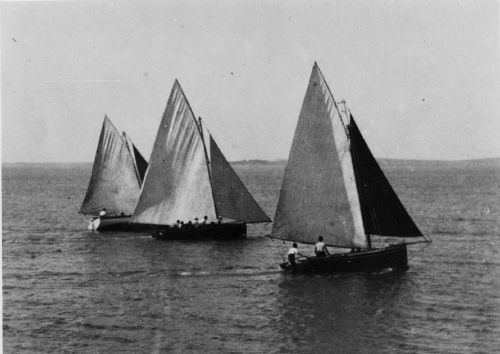
Muriel (foreground) racing in Western Port
For years I lost track of what became of Muriel.
But in the 1980s I went to the boat show in Melbourne’s Royal Exhibition Building, and much to my surprise and delight, there she was! Andy was sitting proudly in Muriel’s stern alongside her new owner, Tim Phillips, who had lovingly restored the couta boat at his business in Sorrento called The Wooden Boat Shop. Muriel looked magnificent.
Wonderful childhood memories of messing around in the open wooden craft came flooding back.
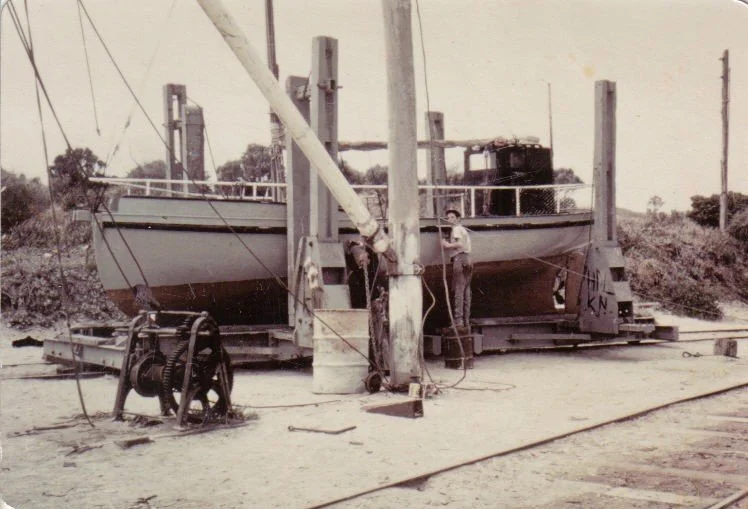
Wattle as a fishing boat during the 1950s and 60s, possibly in South Australia
And when a friend later asked me to go sailing in Sorrento on his couta boat called Wattle, it was love at first sight.
The Lacco family boatbuilders in Queenscliff had made her in 1928 for fisherman Walter Todd who used to take her out through the Rip, a treacherous piece of water.
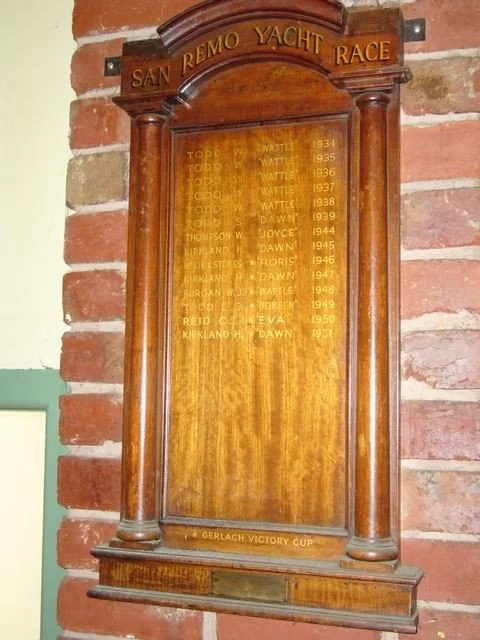
The San Remo honour board
Every year, Walter sailed her to San Remo where she won many local races, including catching barracouta. Indeed, her name is still on an honour board there.
But Wattle had tough patch in her life. She went through a run of different owners and was sailed from Westernport along the coast, ending up in the Port Adelaide River. By the time she was discovered in the 1980s, she had been turned into a houseboat, and was a shadow of her former self.
A group of couta boat enthusiasts, including Tim Phillips, got wind that she was in South Australia and went in search of her. Lo and behold there she was.
Luckily, the owner was happy to sell Wattle to Tim who then set about restoring her. When she came up for sale in 2004, I bought her and sailed her from Sorrento to Flinders with friend Susie Burne.
Every year we would sail Wattle back to Sorrento for annual maintenance, passing Cape Schanck and heading in through the Rip. With the innocence of youth, it never occurred to me we were sailing in quite dangerous waters.
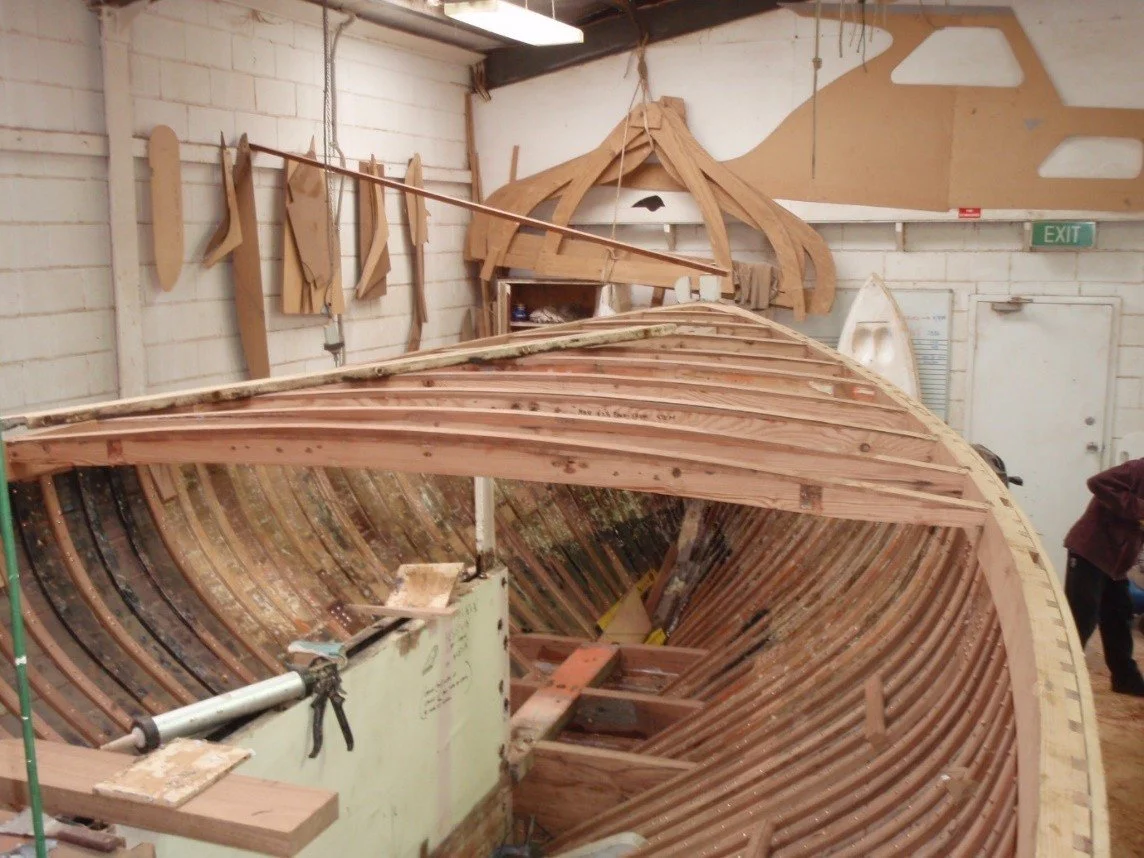
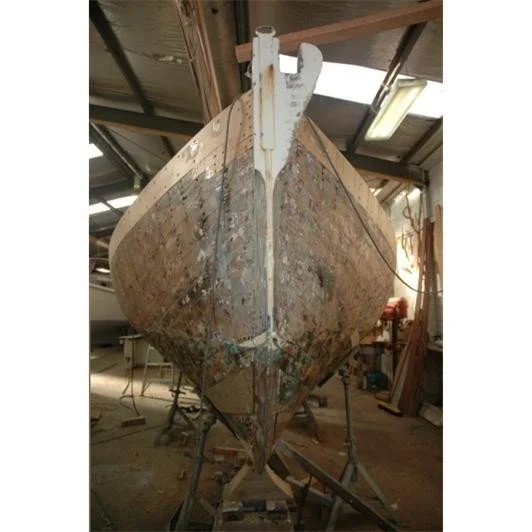
In 2008, I decided Wattle needed an 80th birthday refit. The brief was to return her to the traditional boat she had been. Using old photographs as a guide, the skilful traditional craftsmen at the Wooden Boat Shop rebuilt her, replacing broken ribs and realigning the hull, adding new decking and replacing unsympathetic fittings.
But all that work nearly came unstuck when I sailed her home with an inexperienced crew of four. As we rounded Cape Schanck an unexpected sou’ easterly blew up. The crew couldn’t lower her sails in the conditions, and we ended up motor sailing around West Head, and surfing down waves. Eventually we got into Flinders with my heart racing.
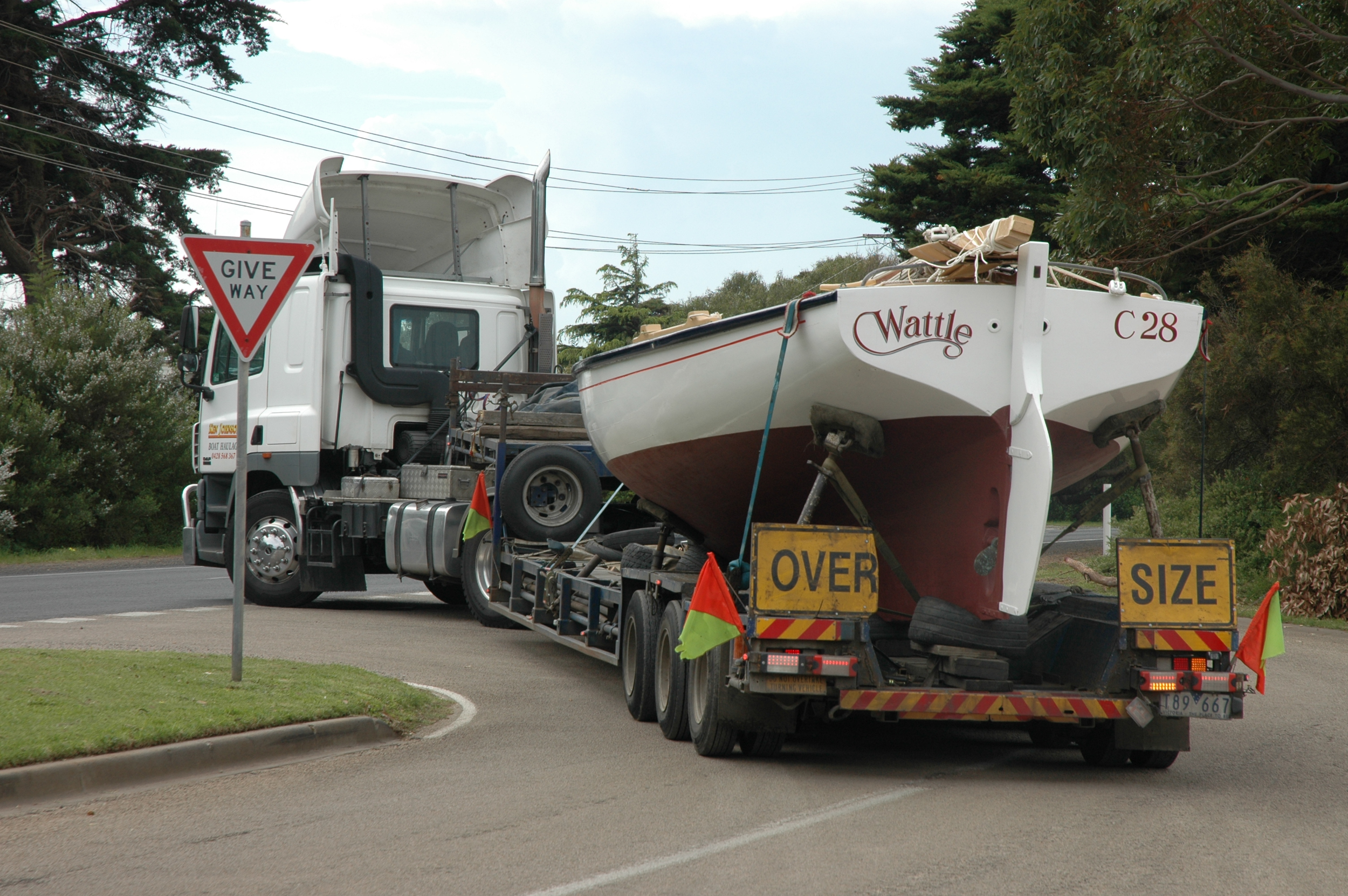
Wattle on the road to Pittwater
Bugger that, I thought, and took advice that Pittwater- a stretch of water north of Sydney- would be less challenging.
I’d never seen that beautiful inland waterway before. My crew and I sailed with a smaller fleet out of Pittwater into the ocean, through the Heads and then into Sydney Harbour. It was magical. We sailed at the Sydney Amateur Sailing Club in Mosman in the Gaffer Day Regatta and raced with other clubs on the harbour. What an adventure.
In 2012, my partner Magnus Mansie and I decided to repurpose a trophy that Wattle had won in 1948 at San Remo. We provided funding so that the cup would now be called ‘The Wattle Cup’ to be awarded at the annual couta boat regatta on Pittwater. It remains an important part of the New South Wales Couta Boat Association.
Circumstances and lives change though, and two years ago Wattle returned to Melbourne. Keeping her at Flinders was not an option as I was no longer inclined to sail in those exposed and rugged conditions, so I kept her at Sorrento.
I’ve now lent Wattle to the Sorrento Sailing Couta Boat Club where she’s used as a training boat, predominantly for women. This has been a great success, and I’m delighted that so many people can enjoy her and learn to sail.
She is, I’m sure, one of the few couta boats which has sailed and fished in Victoria, South Australia and New South Wales. She is still competitive and we are all looking forward to celebrating her 100th birthday in 2028.
Despite all her many owners and different guises, Wattle remains a most remarkable craft as well as a piece of history. I just hope she helps future generations to experience that sublime joy of “messing about in boats”.
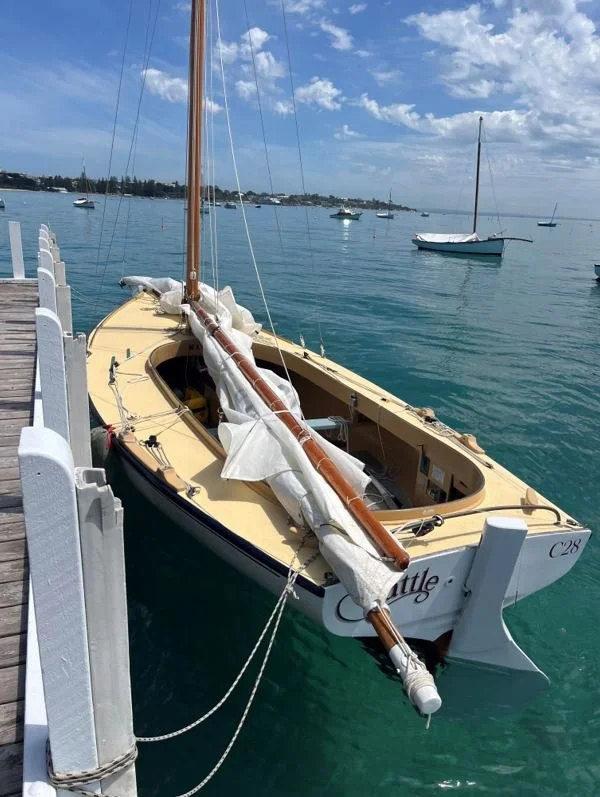
2026, Wattle in Sorrento