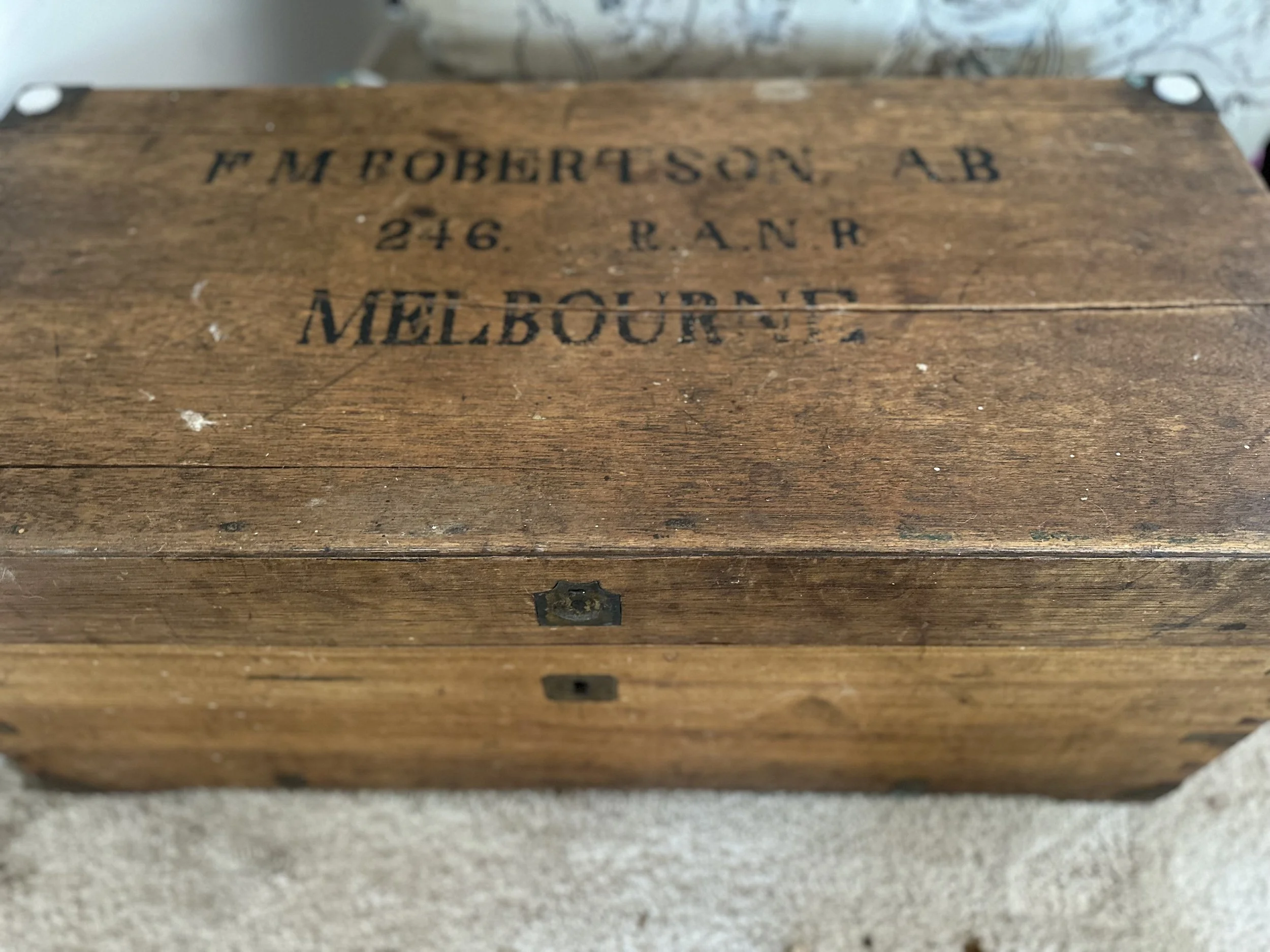
What Megan’s grandfather brought home from the war
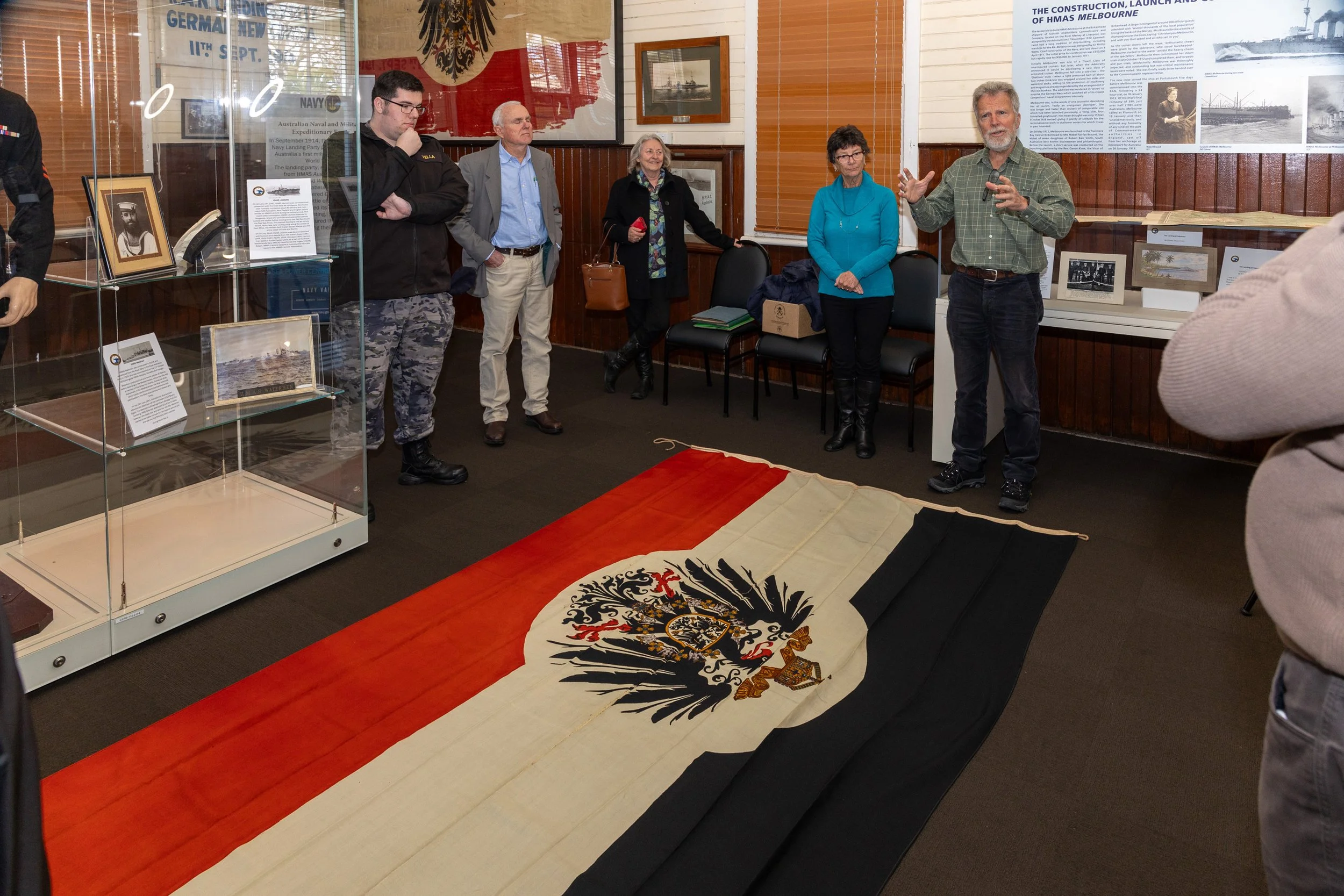
The Robertson family donating WW1 memorabilia to the HMAS Cerberus Heritage and Learning Centre in Cribb Point in Sept 2025
Photo credit: HMAS Cerberus
Dr Megan Robertson knew she and her two siblings would have to clean out their cupboards eventually. Moths and silverfish threatened to invade the boxes of paperwork and paraphernalia that her grandfather had collected as a 24-year-old. Something had to give.
“We suspected these items were important historically,” Megan says, “and if so, we didn’t want to just pass the responsibility for honouring his peers and him to our children.”
But it would take the head of medical research at Melbourne’s St Vincent Hospital years of persistence to find somewhere keen to look after what she discovered was a treasure trove of little-known World War 1 (WW1) memorabilia. And that place just happened to be a short drive down the Frankston-Flinders Road from her home in Shoreham.
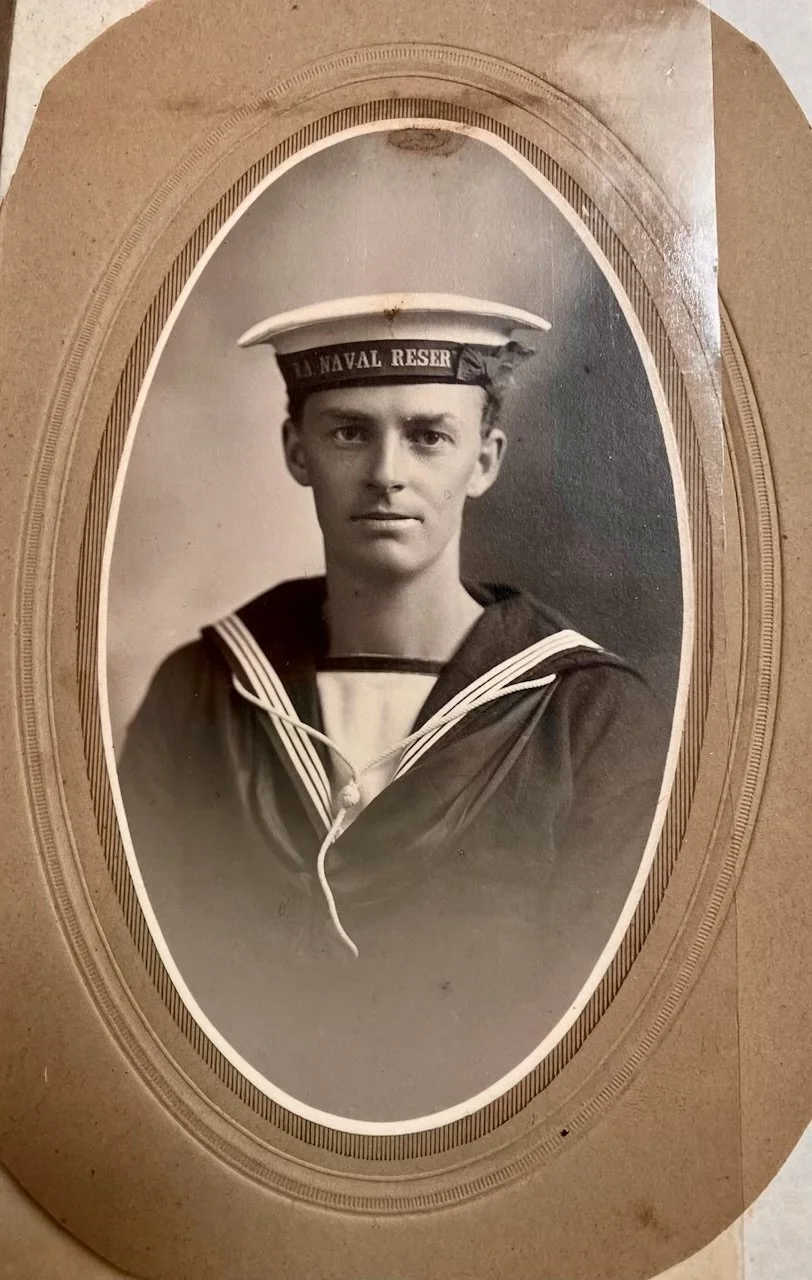
Able Seaman Signaller Frank Melbourne Robertson
Megan’s grandfather Frank Melbourne Robertson was born in San Francisco, USA where his Australian father was a professional cricketer in 1890s with a local team. But the family returned to Melbourne when he was six.
Frank grew up to become an electrical technician with the State Electricity Commission and was an operatic singer in his spare time.
He joined the Navy Reserves and found out pretty quickly that his training at the SEC came in handy.
When Great Britain entered WWI in August 1914, Westminster asked Australia and New Zealand to take control of German colonies in the Pacific. In response Australia set up the Australian Naval and Military Expeditionary Force that was made up of naval reservists and Militia Infantry. It captured German strategic wireless stations and in doing so seized control.
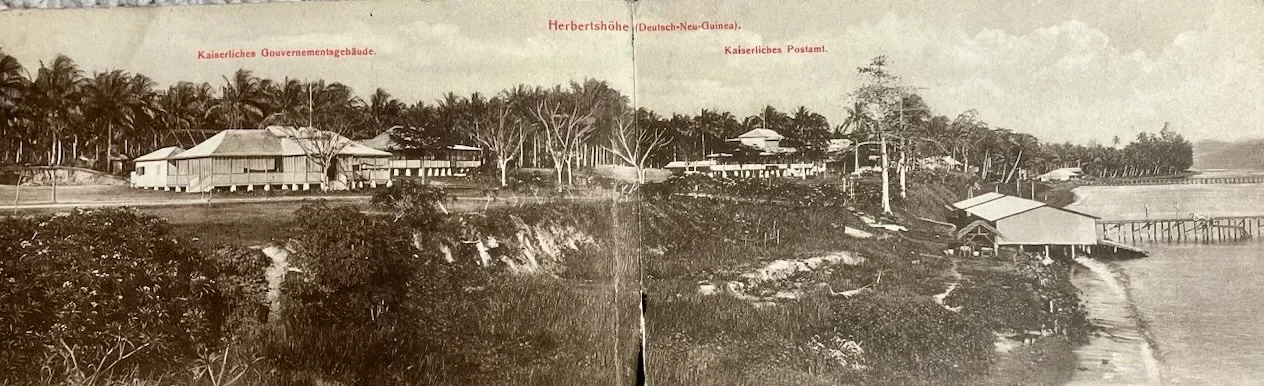
Some of the German postcards that Able Seaman Signaller FM Robertson brought home from Rabaul
Able Seaman Signaller Robertson landed at Rabaul on September 11, 1914. It was the capital of German New Guinea in what is now Papua New Guinea. This would be the first time Australia sent troops to war and the first time the Federation suffered casualties.
Within six days the Expeditionary Force successfully fought off German and Melanesian police forces at Bita Paka, a German installation close to Rabaul, where there was a critical radio tower, and took control.
Frustrating the Australians, the German flag kept flying.
“According to the story passed down the family, the commander said whomever gets to the top of the tower first, gets to keep the flag,” Megan says.
Frank had been a gymnast and a long- distance runner so was very fit. He made the climb and grabbed the flag that measured about 2 by 3 metres.
‘A few days later all the men were brought together and told that whomever had the flag had to hand it in,” Megan says. “The flag was so pristine it was still stiff. Clearly the Germans had only recently raised it convinced they’d rule the territory for a long time.”
But Frank was reluctant to relinquish the trophy. He found another German flag in a wheelbarrow under the wireless station-this was tatty and torn-and gave this one to his commander.
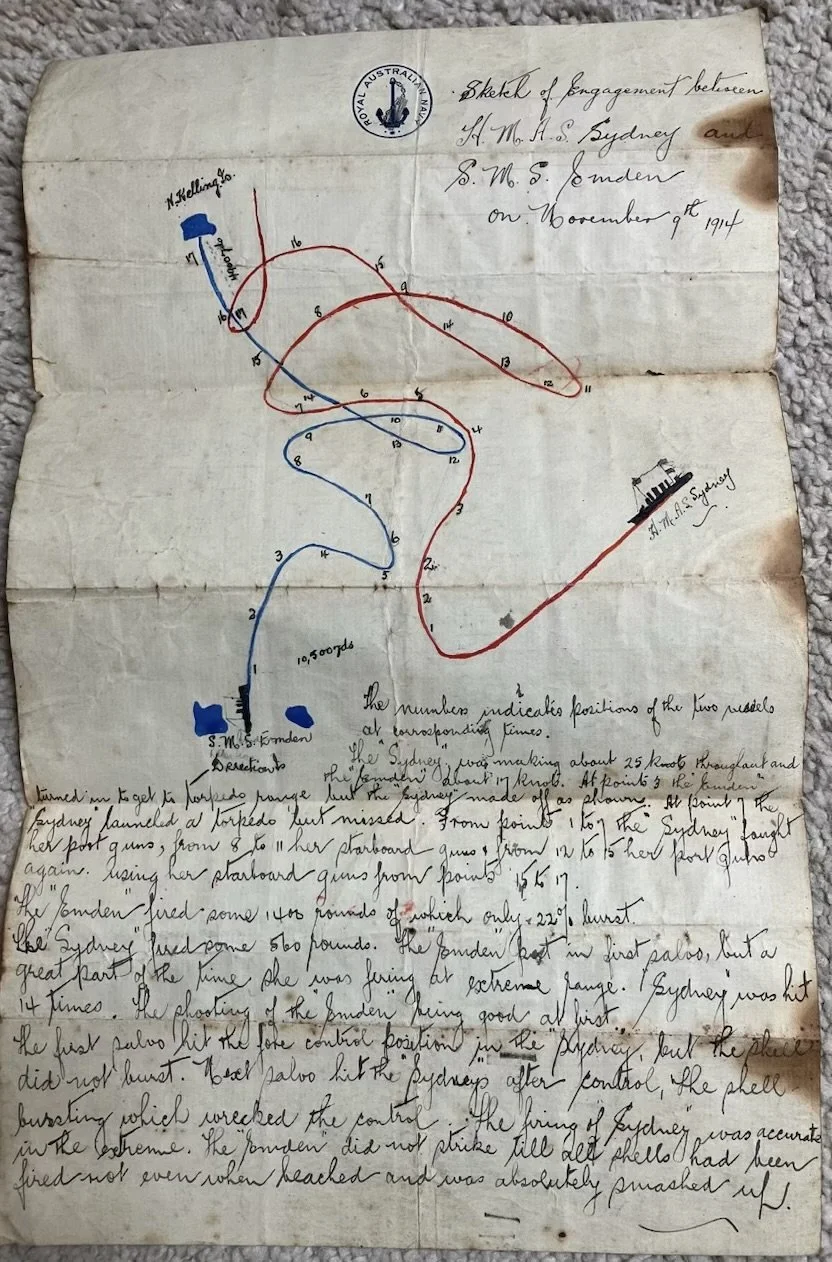
A mud map battle plan that Able Seaman Signaller FM Robertson brought home from war
When Frank returned to Melbourne, he had his daily diary detailing what happened during the battle, postcards in German, an annotated war magazine and countless photographs of his time away- all packed away in his wooden seaman’s chest. He also had the pristine flag.
“He desperately wanted to join the Navy,” Megan says, “but was knocked back due to a knee injury he’d sustained in German New Guinea, a rejection that always irked him.”
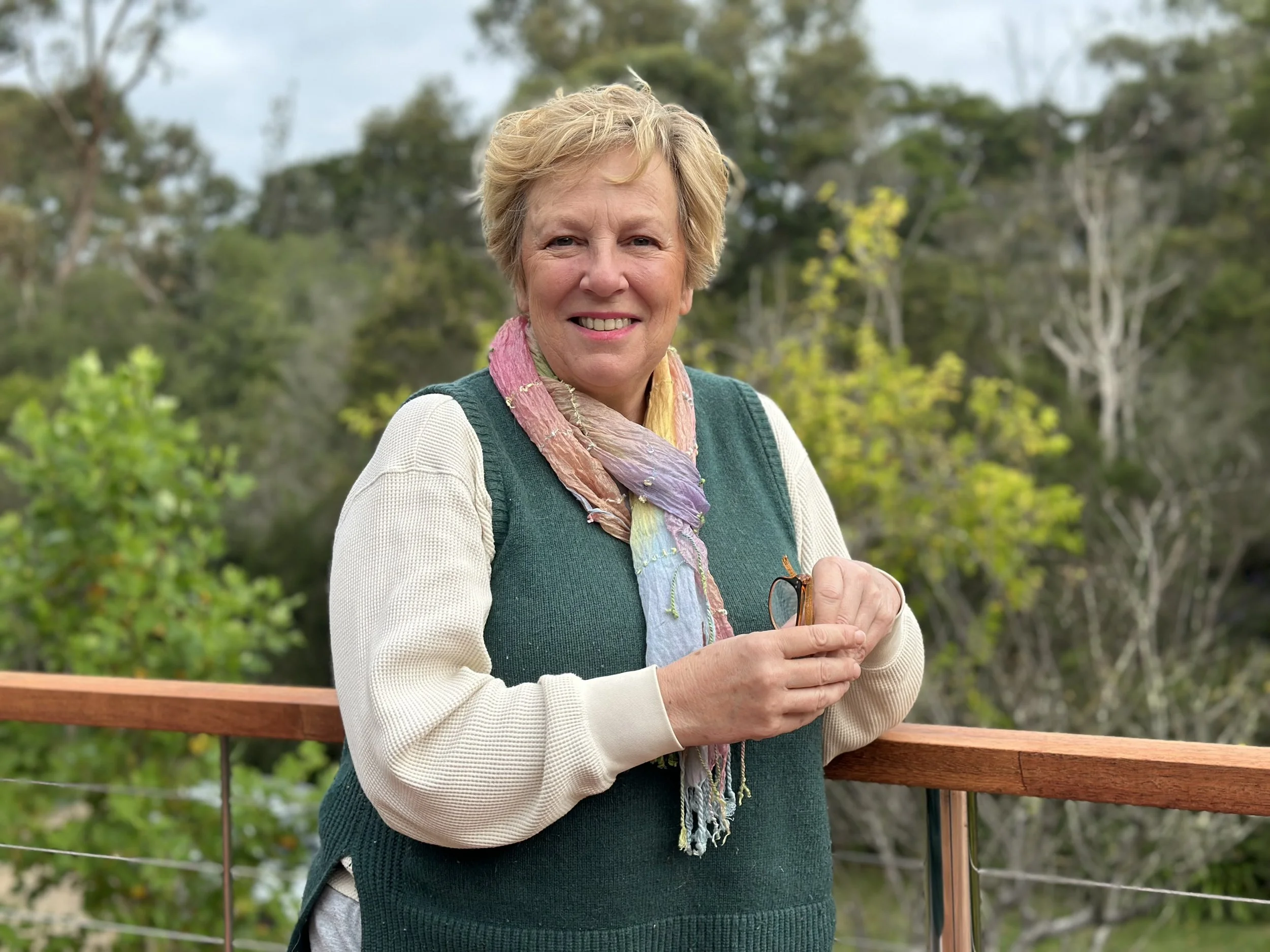
Megan Robertson at her home in Shoreham
Just before COVID lockdowns began, Megan decided it was time to find a home for the memorabilia. That proved harder than she’d expected.
“When I rang the Australian War Memorial in Canberra, they said I had to prove he was in the Expeditionary Force which was maddening given the Memorial had the information,” Megan says.
Last year she heard a whisper that HMAS Cerberus in Cribb Point had a worn-out WW1 German flag in its museum.
“I was astonished as even though I’ve been coming to this part of the Peninsula on holidays all my life, I’ve always assumed the Naval base was just a training centre,” Megan says. “I wondered if this flag was the one Frank found in the wheelbarrow.”
Turns out it was. Now Able Seaman Signaller Robertson’s records of this little known but critical battle finally reside where everyone can see and study them.